Group 4 Photovoltaics (G4PV) SA

G4PV has ambitious plans to launch a 20 MW Perovskite Solar Cells Pilot Production Line in Sion, Switzerland. The pilot line will be designed to manufacture both perovskite and perovskite/Si tandem solar panels. The panels are designed to achieve impressive performances, with perovskite tandem panels surpassing, respectively, 27% and 35% efficiencies. The intrinsically low cost and low energy deposition techniques employed will yield electricity production at less than 0.02 €/kWh.

High efficiencies

High efficiencies beyond that of traditional silicon photovoltaics.

Low-cost

Low-cost production as the materials and manufacturing processes are comparably inexpensive.

Flexibility

Flexibility and versatility as the panel can be made in glass or plastic, the latter being 100 times lighter than current commercial silicon photovoltaics. 

Rapid production

Rapid production as low-energy solution-based processes are used.

Applications

We target utility scale PV, Building integrated PV and Vehicle Integrated PV.

G4PV

The Group 4 Photovoltaics (G4PV) is a spin-off from EPFL/EPFL-Valais, created after many years of research on perovskite solar cells under the leadership of Profs. Mohammad Nazeeruddin and Paul Dyson.
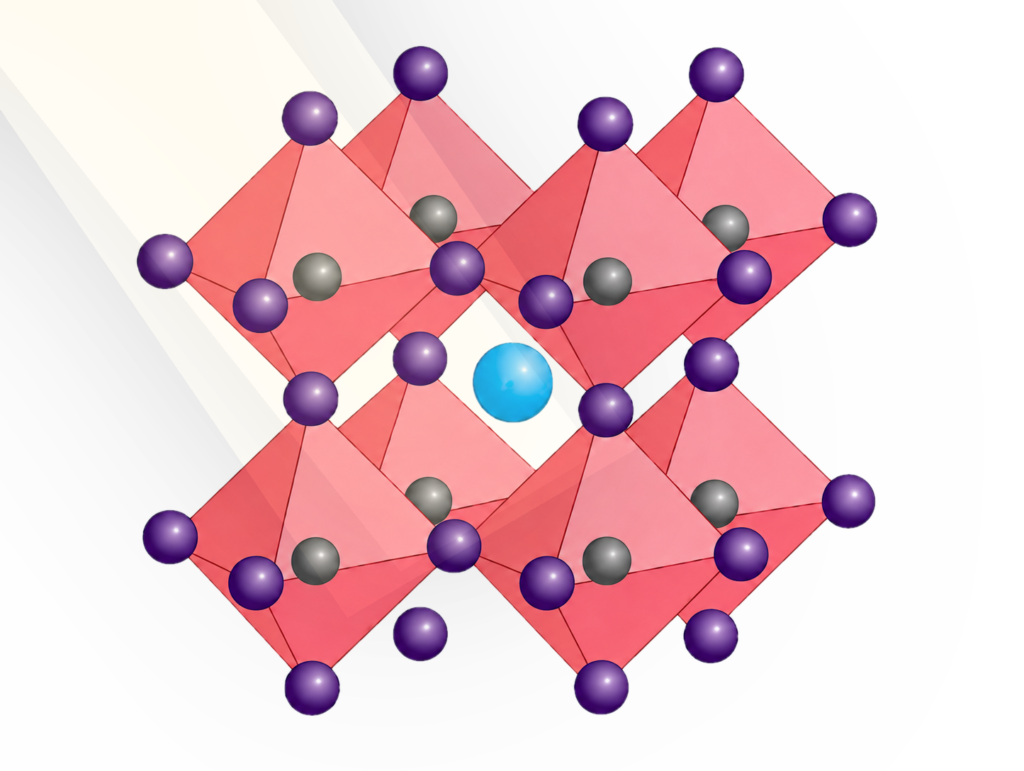
Perovskite solar cells use elements from Group 4 of the periodic table and convert sunlight into electricity. At the end of life, the elements can be recycled to provide circularity.
Perovskite solar cells are thin and lightweight and can be applied on both inflexible (glass) and flexible (transparent plastic) supports.

Our Professional Team

Prof. Paul Dyson

Paul J. Dyson received his PhD in 1993 from the University of Edinburgh, remaining there for a further year as a postdoctoral fellow, and then moving to Imperial College, where he obtained a Royal Society University Research. His research focus on organometallic chemistry at the interface with medicine, catalysis and material science.

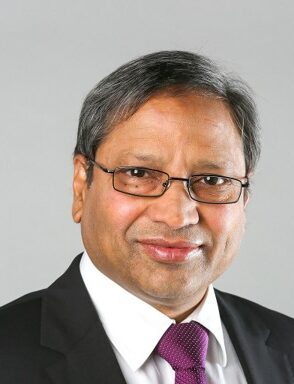
Prof. Mohammad Khaja Nazeeruddin

Nazeeruddin is a Em Professor of Chemistry at the EPFL Sion campus, and his current research at EPFL focuses on Perovskite Solar Cells and Light-emitting diodes. Based on the Career Long Impact, Nazeeruddin has been enlisted as one of the Top 2% Most-Cited Scientists in the world from the list published by Stanford University in October 2022

Lianghui Li

Lianghui Li obtained his bachelor in College Chemistry, Nankai University. He is currently pursuing his PhD in the Laboratory of Organometallic and Medicinal Chemistry (LCOM), EPFL. His research focuses on functional organic molecules and their applications in pharmaceuticals and materials science.

Shun Tian

Shun Tian obtained his Bachelor's degree from the School of Optoelectronics at Beijing Institute of Technology (BIT) in 2019. In 2022, he obtained his Master's degree from the College of Optical Science and Engineering at Zhejiang University. Currently, he is a PhD candidate in the Laboratory of Organometallic and Medicinal Chemistry (LCOM) at the Swiss Federal Institute of Technology in Lausanne (EPFL). His research focuses on perovskite-based optoelectronic devices, including solar cells and light-emitting diodes.

Jacqueline Morard

Jacqueline Morard

Administration

Jacqueline Morard is currently the secretary of the laboratory of organometallic and medicinal chemistry at the Ecole Polytechnique Federal de Lausanne that is directly dependent on the Federal Department of Home Affairs of Switzerland. She was born in Zurich in 1964 and received her diploma in office management in 1985. After her training she moved to the French part of Switzerland where she took over a job as a junior secretary with Plastag in Eclépens. In 1985 she worked with Siemens where she evolved steadily during 14 years to an executive secretary. In 2000 she joined the EPFL, more precisely the laboratory GECOS that has dealt with environment. After the retirement of her boss she joined the Research Center in Plasma Physics within the EPFL as an assistant to the director where she worked until the 2008.